David Redfern LG on the value of support from outside The London Group.
Despite The London Group being a cooperative for members it is notable how much in its history it has received crucial support from non-members. This was never more so than in times of war, the Group managing to survive two world wars with the support of non-members. The London Group’s first exhibition was in March 1914; six months later the country was embroiled in the First World War. But despite this devastating setback the group somehow managed to organise two exhibitions each year until the war’s end. This was largely achieved by other, mainly women artists finding the time and work to show in the Group’s exhibitions at the Goupil Gallery and The Mansard Gallery. These non-members were colleagues of existing members and would have been invited to participate to keep The London Group project alive; for example, twenty-three members and twelve non-members formed the May 1917 exhibition at the Mansard Gallery. Included in those twelve were Ruth Doggett, Nina Hamnett, Roger Fry and Bernard Meninsky. Incidentally, this was the exhibition in which Mark Gertler exhibited “Merry-go-round”, his notorious anti-war painting which caused public uproar and is now hung in Tate Britain.
Fortunately, The London Group was in good shape as the country once more went to war in September, 1939 although the group only managed to mount one exhibition each year at the New Burlington Galleries (1939), the Cooling Galleries (1940), the Leger Galleries (1941/42) and the Royal Academy (1943/44).
An anonymous writer in the catalogue to the 1940 Second Wartime Exhibition states, “The London Group is probably the only association of Artists in Britain today to whom young painters, adventuring away from academicism, may submit their work for exhibition knowing that they will receive sympathetic consideration. Nevertheless, it attempts, and indeed claims to maintain, a standard of what it believes to constitute ‘good painting’”. This would seem to indicate that the open submission process was used for this exhibition which included Phyllis Bray, Tristram Hillier, Mary Godwin, Edna Ginesi, Mary Potter, Duncan Grant, Victor Pasmore, Ethel Walker, Matthew Smith and Vera Cunningham.
After 1945 the Group was quickly back on its feet organising huge open-submission exhibitions. Under the presidency of Claude Rogers in the 1950s some of the biggest London Group exhibitions ever organised were held in the cavernous New Burlington and RBA Galleries. The 1956 “London Group Annual Exhibition” was hung in the RBA Galleries, Suffolk Street, Pall Mall East, London SW1, who charged The London Group £800 to hire the galleries. Of the four hundred and five items on exhibition, twenty-eight were drawings, thirty-eight were sculptures and three hundred and thirty-nine were paintings. This was the largest post-war exhibition organised by The London Group. The huge majority of paintings were either still life or landscape, discernable by their title. This must have been a huge exhibition to arrange, there were two hundred and forty non-members exhibiting including Frank Auerbach, Gillian Ayres, John Bratby, Prunella Clough, John Copnall, Anthony Eyton, Patrick George, Roger de Grey, Mary Martin, Dorothy Mead, Margaret Mellis, Henry Mundy, Leonard Rosoman, Hans Schwarz, Yolanda Sonnabend, Adrian Stokes, Michael Tyzack and Euan Uglow. Unfortunately, large rentable central London exhibition spaces like the RBA Galleries no longer exist.
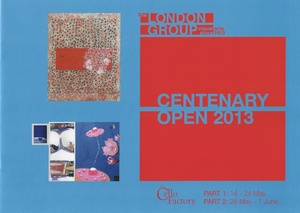
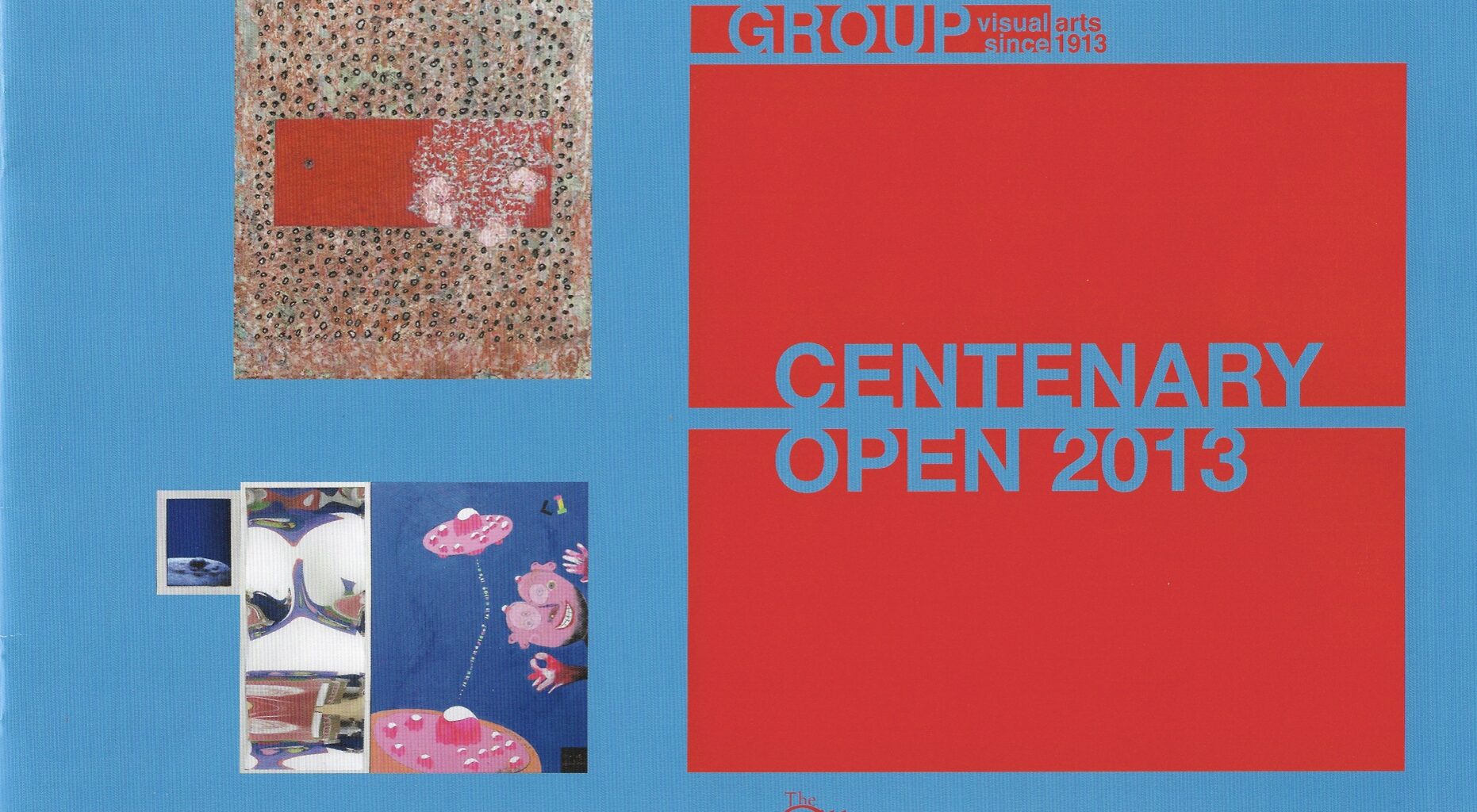
Sourcing an affordable exhibition space has always been a challenge for The London Group and its desire to exhibit as many artists as possible. In recent years we have discovered Copeland Gallery and before that, for many years, the Cello Factory generously provided free of charge by Susan Haire and Frank Hinks. In 2007, following a dormant period, the open submission process was revived by then president Susan Haire using the Menier Gallery and Cello Factory galleries. Apart from the interruption during the pandemic The London Group has organised a biannual Open Exhibition for the last eighteen years. It is worth noting a number of points regarding Open exhibitions. All London Group organisers are volunteers and give their time willingly and for free. The Group does not make any profit from submission fees which, with good management, generally cover expenses, i.e. gallery hire, promotion, insurance, invigilation, private view etc.. In recent years most newly elected members to The London Group were nominated from open exhibitions making it one of the most transparent, inclusive selection processes for contemporary artists.