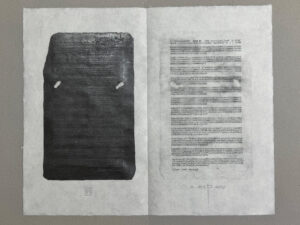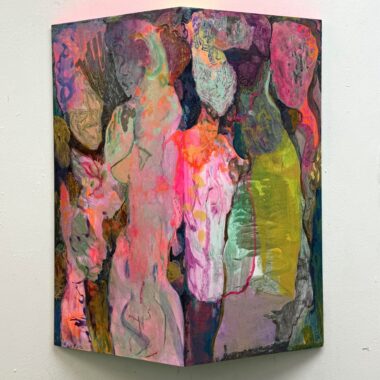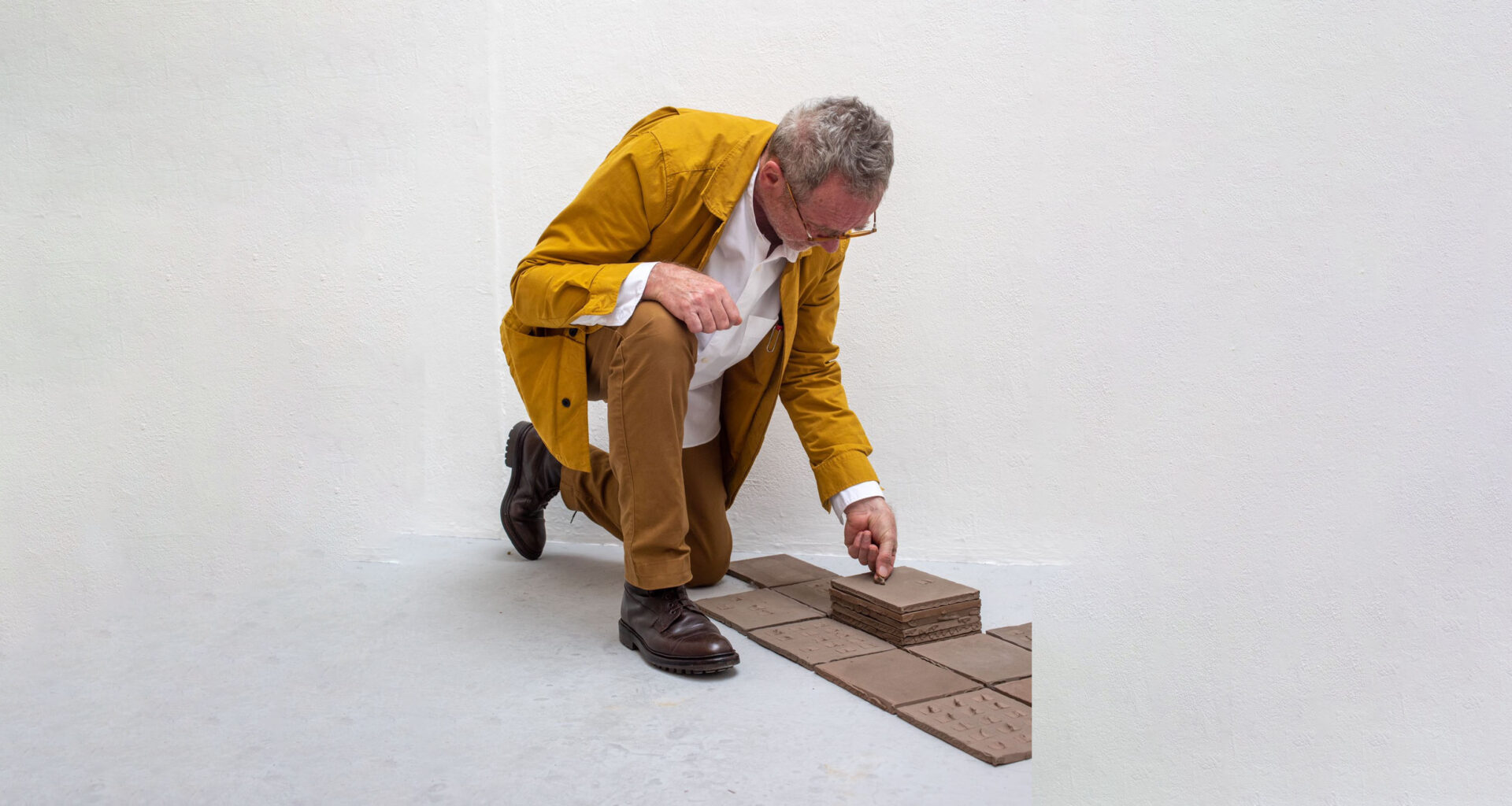
Simon Head walks a line between language, philosophy, and materiality, occupying territories of translation and reinvention; his concepts are triggered by personal reflexive memory, but the outcome is seldom about himself; for him the visual memoir helps explain things that would otherwise remain a mystery.
He says, “These days my art incorporates evidence of ecological devastation during the present epoch (Holocene); I try to understand the eco problem through ‘Anthropocene’ literature, field trips, and engaging in a long-term commitment to the inherently social nature of the material world, creating a ‘social’ space rather than merely presenting objects.
“you just have one material world to explain another material world and the gap in between is the territory of meaning“ – Juan Muñoz.
Always preoccupied by the interface between analogue and digital experiences, Simon Head continues to make work which combines aesthetic value with things that are going on at the edges, behind the aesthetic surface.
www.simonhead.co.uk
@simonheadstudio
Simon Head
31.07.2026.
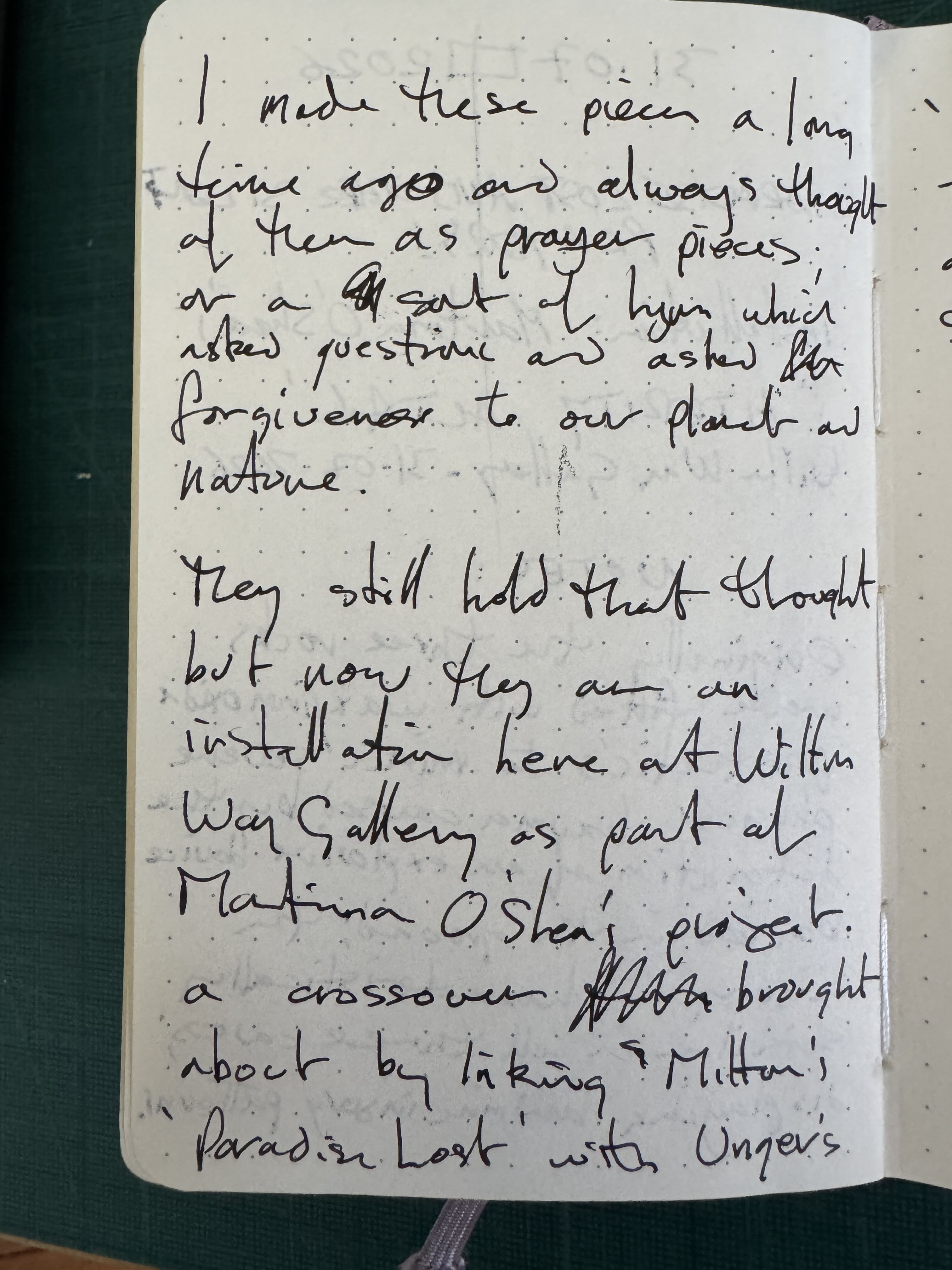
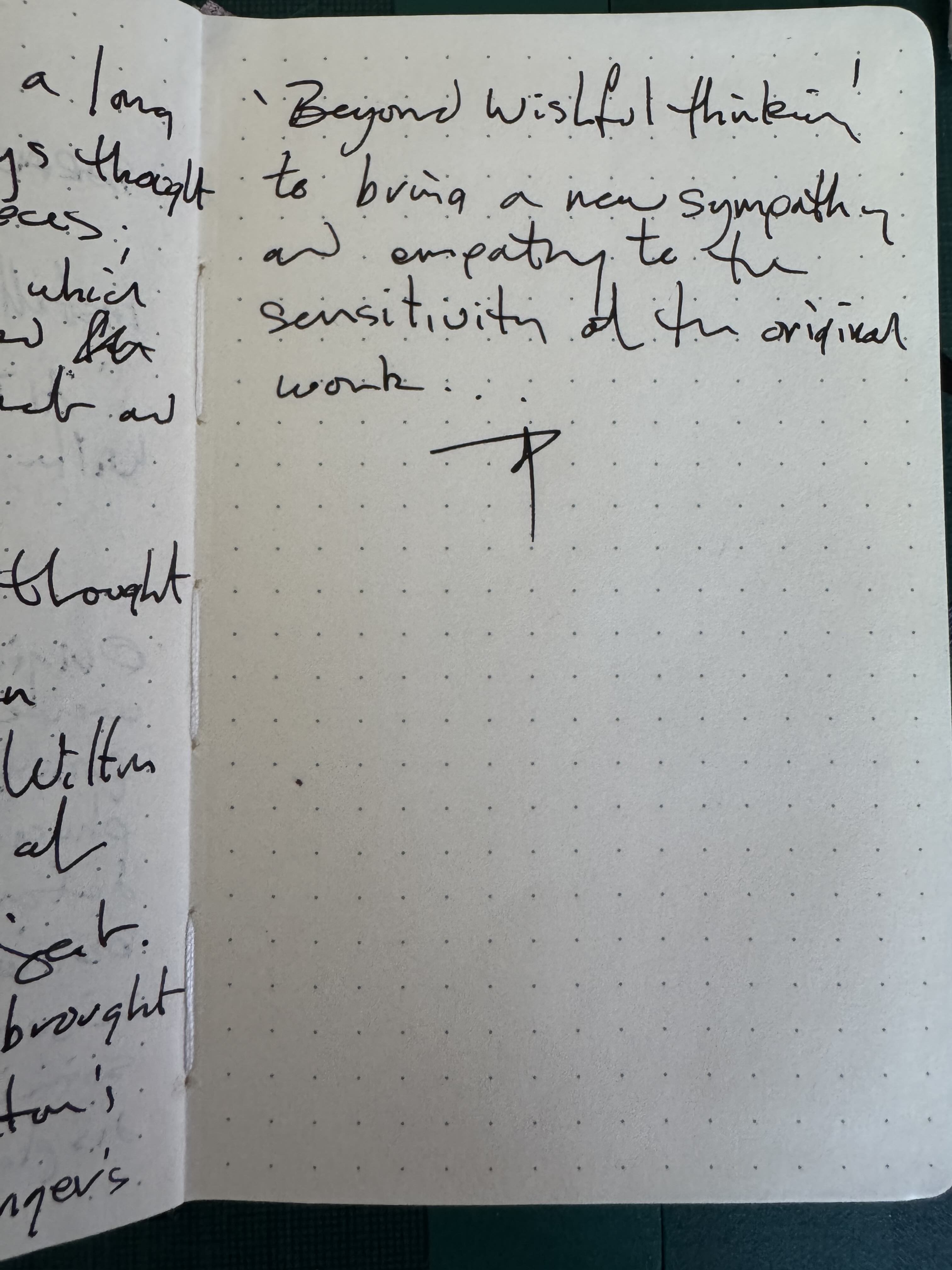
Project ‘PARADISE LOST AND OTHER SILENT PRAYERS‘ 2026; is inspired through the reading and comparison between Milton’s ‘Paradise Lost‘ and Roberto Mangabeira Unger’s ‘The Religion of the Future’.
Principal
John Milton’s epic poem ‘Paradise Lost‘ can be considered a grand act of prayer, functioning through its opening invocation, its internal hymns, and its ultimate spiritual ambition.
(source: AI.)
Now consider John Milton’s epic poem ‘Paradise Lost‘ with the first chapter / first paragraph of Roberto Mangabeira Unger’s ‘The Religion of the Future’;
‘Beyond wishful thinking.’
“Death…
Everything in our existence points beyond itself.
We must nevertheless die.
We cannot grasp the ground of being.
Our desires are insatiable.
Our lives fail adequately to express our natures; our circumstances regularly subject to belittlement.
Religion has been both an attempt to interpret the meaning of these irreparable flaws in the human condition and a way of dealing with them.
It has told us that everything is ultimately all right.
However, everything is not all right.
A turn in the religious consciousness of humanity would begin in an approach to these defects that abandoned the impulse to deny them.
Religion would cease to console us for these frightening facts.
Our hope might survive, changed.”
(source: Roberto Mangabeira Unger – ‘The Religion of the Future’.)
Procedure
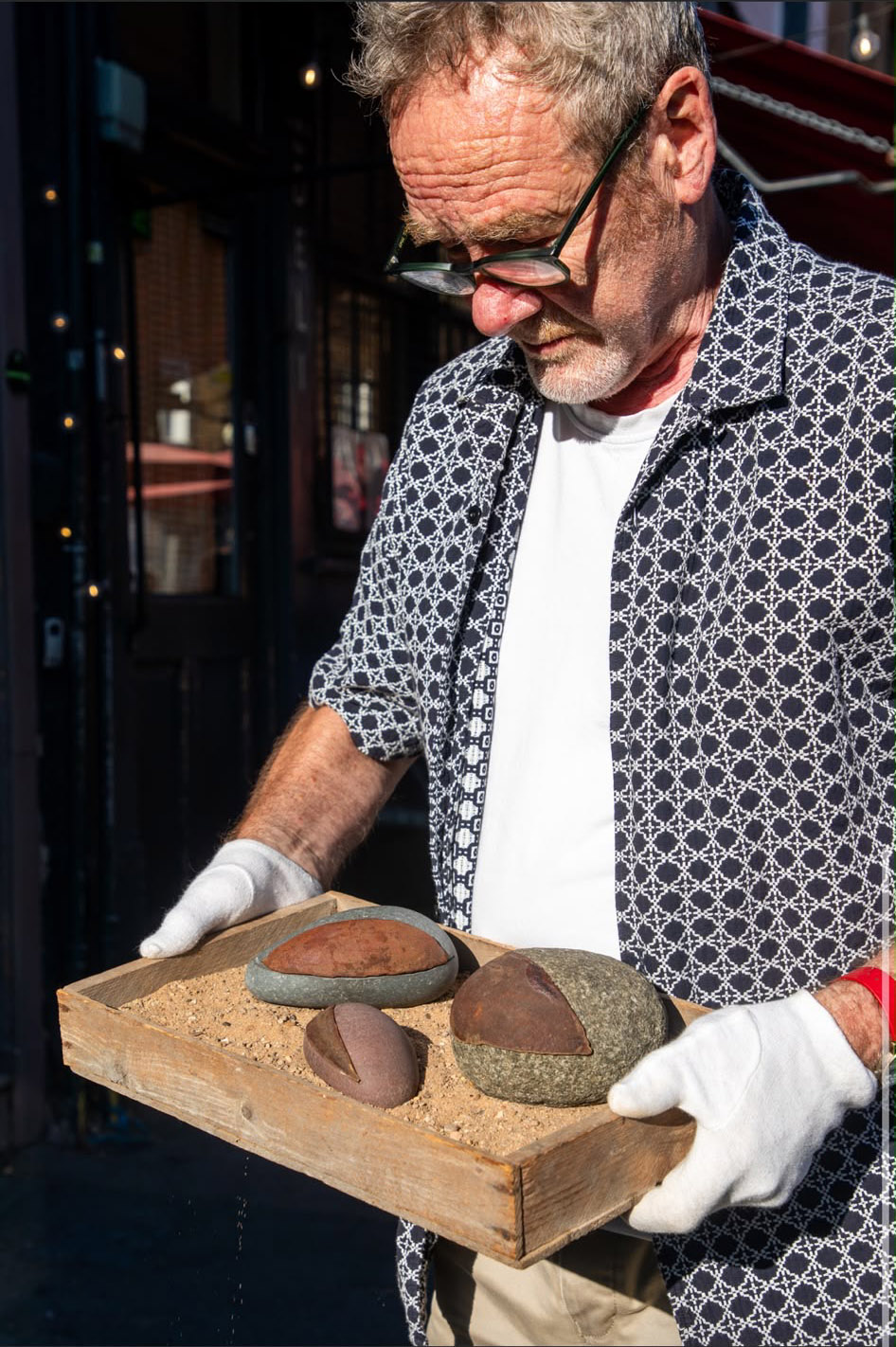
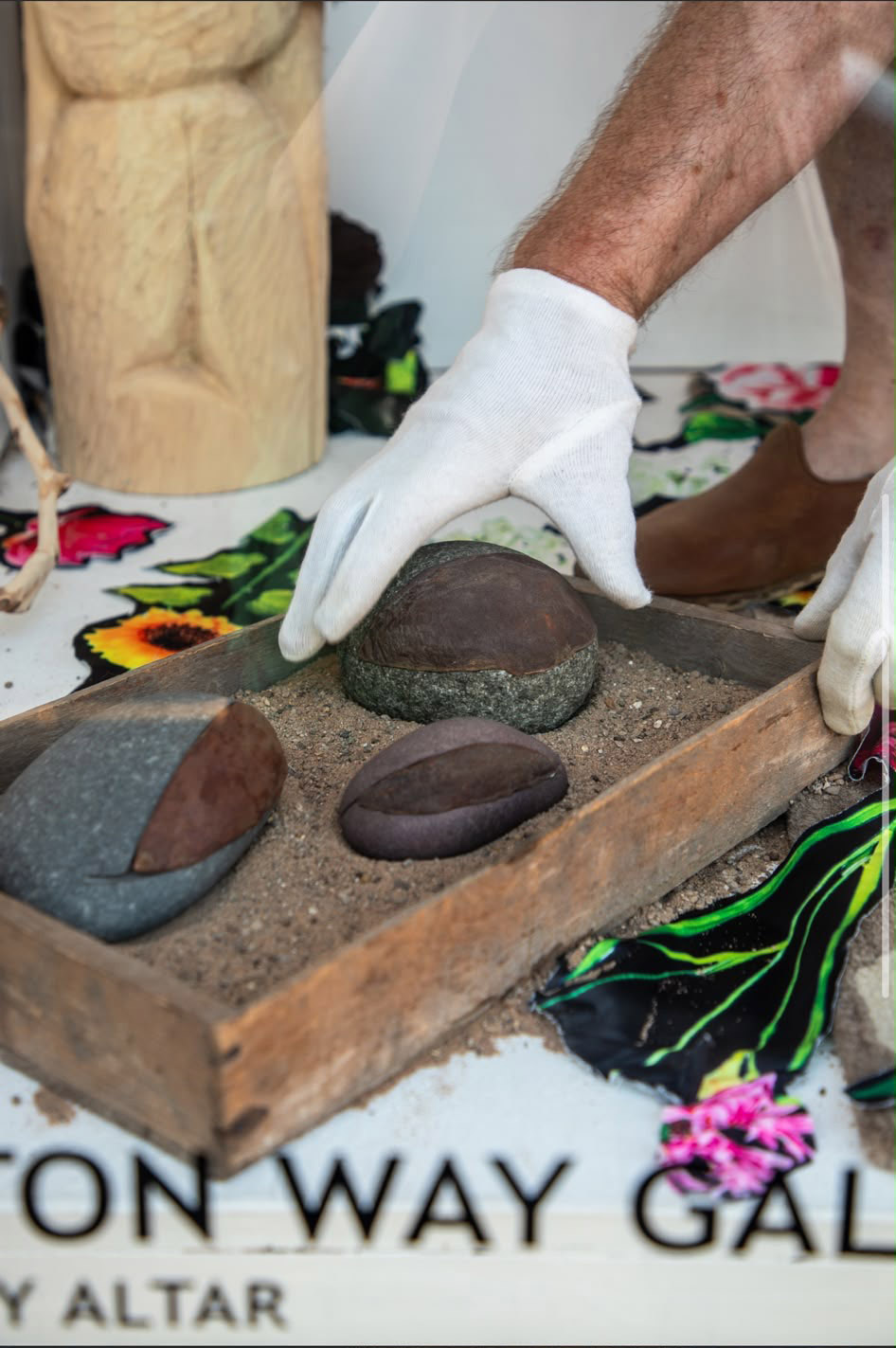
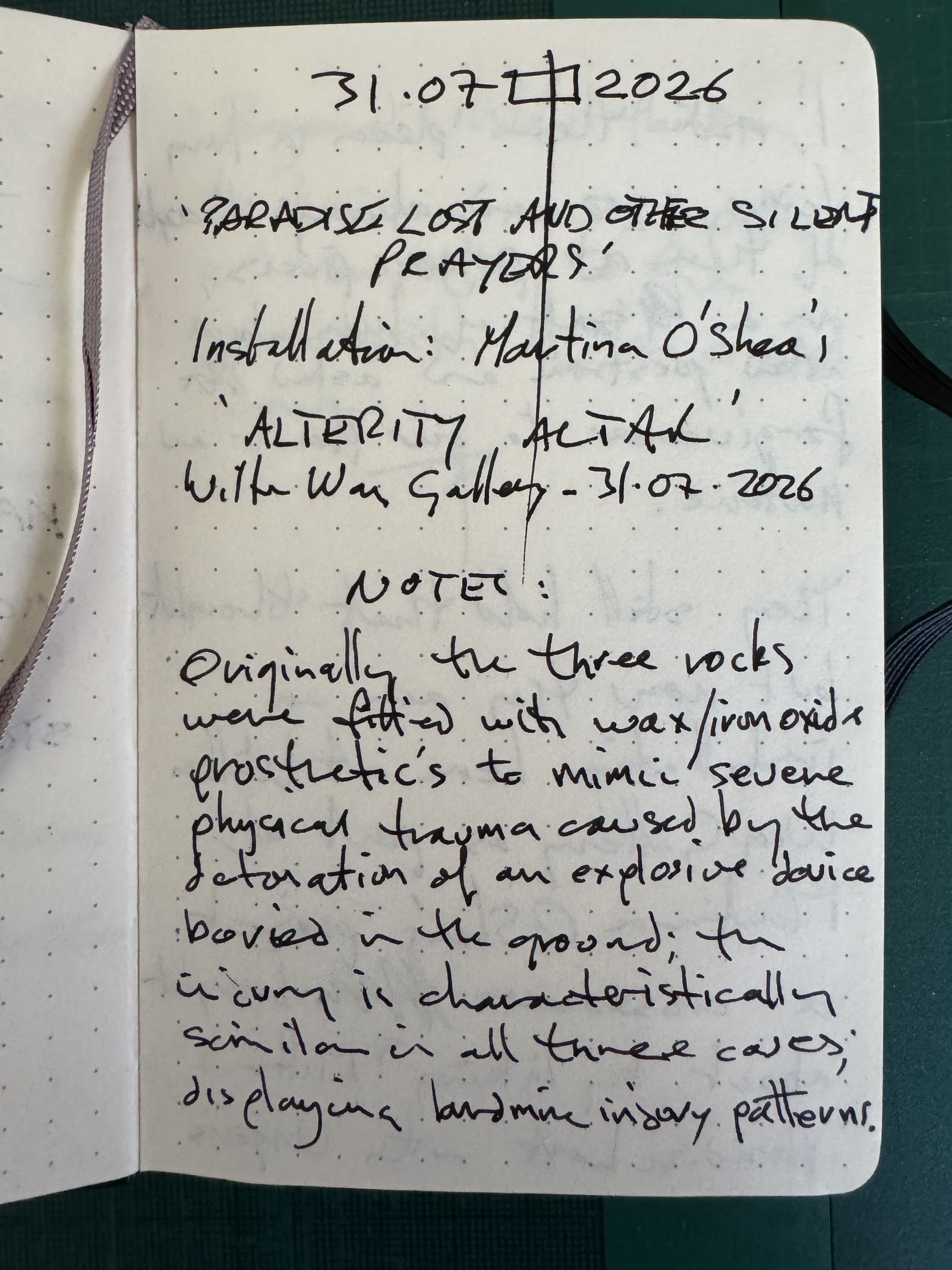
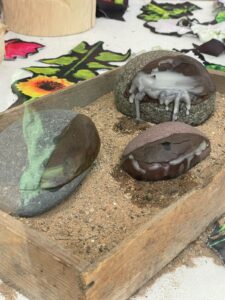
Three small igneous rocks; each has been fitted with a wax + Iron Oxide prosthetic element, the kind associated with people sustaining landmine injury.
I arranged these rocks on a bed of sand which I borrowed from Martina’s shop basement installation.
Outcome
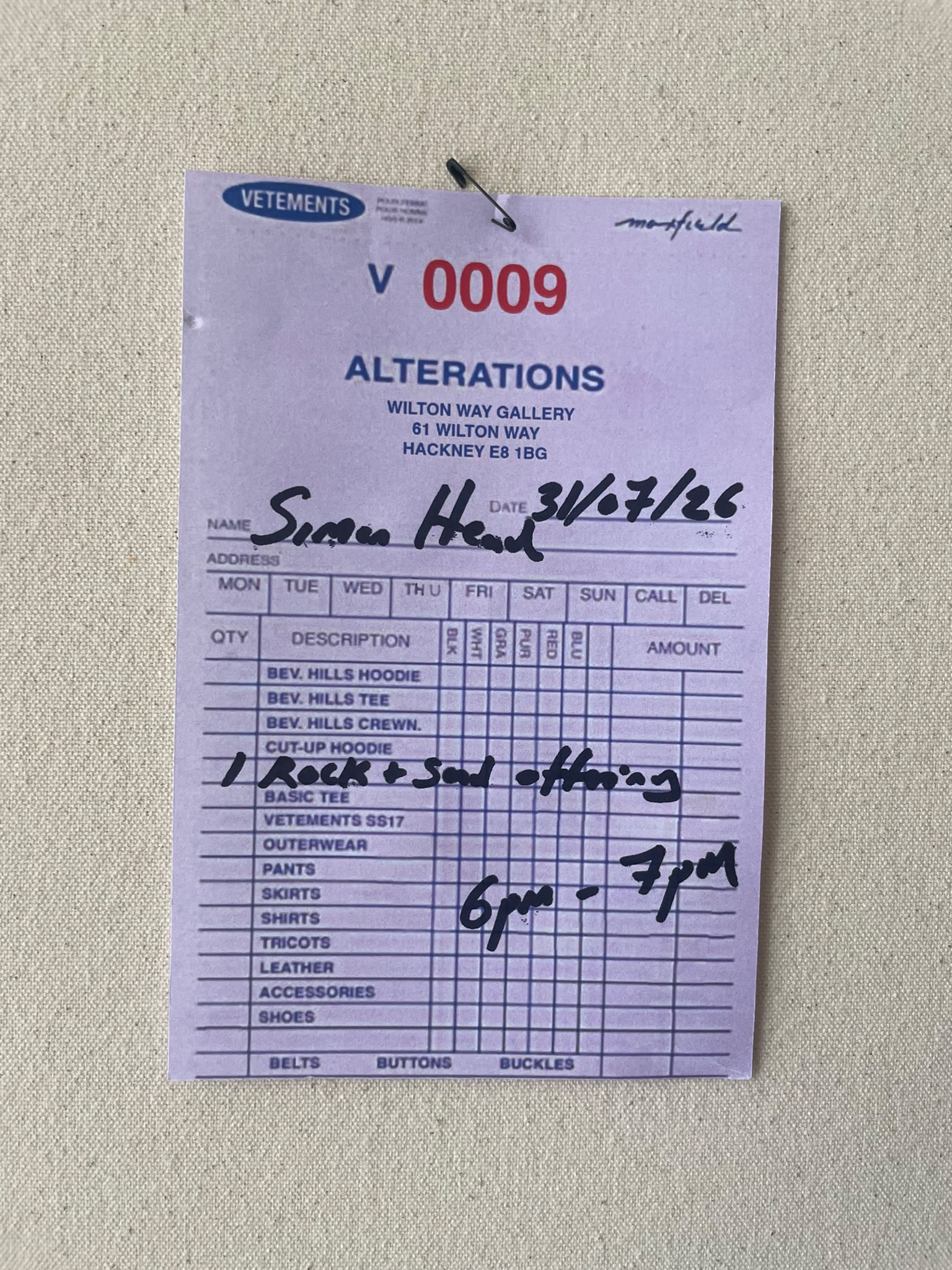
‘PARADISE LOST AND OTHER SILENT PRAYERS‘ 2026.
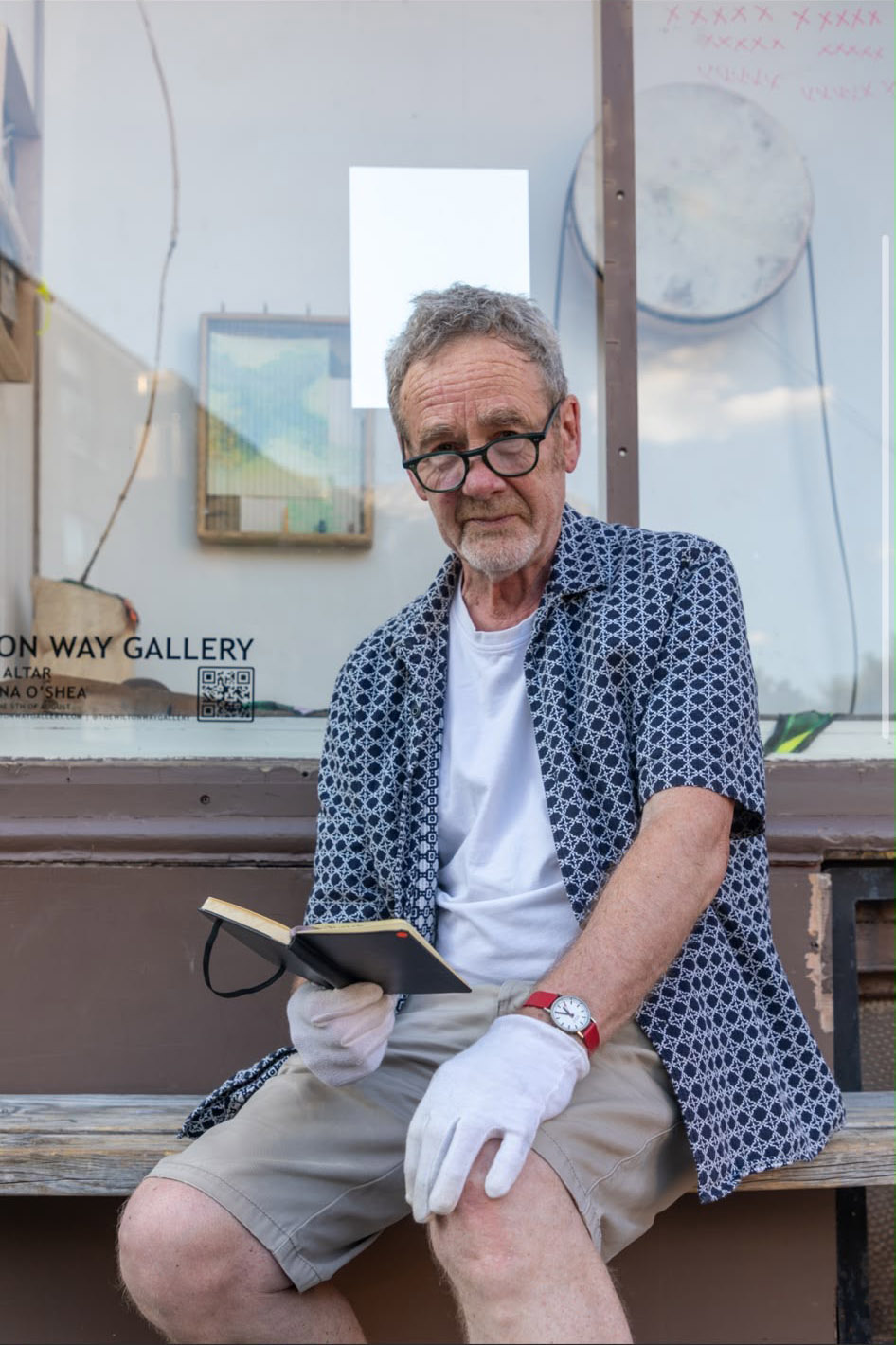
Presented as an installation in Martina O’Shea’s project ‘ALTERITY ALTAR‘, Wilton Way Gallery, 61, Wilton Way, Hackney. E8 1BG._31.07.26.
Images of work
Aftermath
Simon Head received a message on the 01.08.26 informing him of the demise of his ‘PARADISE LOST AND OTHER SILENT PRAYERS‘ 2026. installation due to extremely high temperatures from the sun shining through the shop window; the wax prosthetic’s in each rock was now melting; Martina will hopefully record this demise photographically… nature taking its course…
Simon Head
27.02.26
Project: ‘FINGERPRINTS AND SILENT PRAYERS’_2026.
Concept:
I am not a computer programmer or an anthropologist, and I’m not concerned with programming or the true meaning of quipu structures; I am drawn to the territories of translation and reinvention; places where I might recognise inner similarities between things which are constructed in entirely different ways.
I am an artist working with absence and loss.
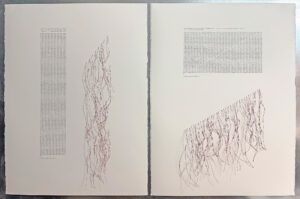
‘FINGERPRINTS AND SILENT PRAYERS’_2026. is a poem, and unsurprisingly, will be made in sixteen parts or verses.
It is a form of meditation, a visual memoir, perhaps an ode to a computer.
Each poem is initially conceived as a typographic layout and constructed with the exact same coded text; which was cast through data forks of a scanned image of the word QUIPU; a hexadecimal alphabet contains sixteen character’s; a b c d e f 1 2 3 4 5 6 7 8 9 0.
Material:
Hexadecimal code is not considered the work of any individual; any programmer could have written it; a computer program could have produced this work; the coded text is just a material to me, an amount of stuff to use.
Aesthetically, the seemingly random digits of a hex code layout, form pattern sequences, creating rhythms of space; concentrating on these patterns provides the possibility of peaceful meditation; and might be thought of as digital fingerprints.
Quipu knots are distinct to the person who tied them; like a human fingerprint, they are individual to the person who made them; they affect a meditative quality during the process of being tied; like prayer knots.
Notes:
Hexadecimal and Quipu codes.
Hexadecimal code – 1950/1960.
Hexadecimal code was adopted for computing in the 1950’s and popularized by IBM in the 1960’s.
Hex, short for “hexadecimal base counting”, was invented in France in the year 770 AD. In that time Mervin, a famous wizard, became a counsellor to King Charlemagne because he had 8 fingers on each hand.
Mervin could count faster than the other counsellors and treasurers.
Binary is cumbersome for humans.
Quipu – 1438/1533.
(Inca Empire, 1438/1533), a complex, standardized administrative tool used throughout their vast territory; used most extensively for administration, census, and accounting.
The ‘Quipu’ (or khipu, meaning “knot” in Quechua) was not invented by a single person, but rather evolved as a sophisticated 3D recording system used by various Andean cultures.
‘Quipucamayocs‘ (Khipukamayuq); were the trained specialists (“knot-keepers”) who created, read, and maintained the quipus.
Reading:
‘Arte Programmata‘: Freedom Control and the Computer in 1960’s Italy. Lindsay Caplan.
‘Continuous Project Altered Daily‘: The writings of Robert Morris.
‘Manual of popular science‘, by Waltercio Caldas.
‘Piero della Francesca‘, 1415/1420, by Oreste del Buono.
Simon Head
27.02.26
Project: ‘AI / I CHING’_2026.
Question: I asked AI, “What does AI think about the I Ching?”
Answer: The ‘I Ching‘ offers an Image of reality toward AI’s consciousness of modelling and alignment; AI doesn’t ‘think’ in the human sense, but modern AI systems see the ‘I Ching’ (Book of Changes), as a highly structured, binary-based precursor to modern computing that offers a unique framework for processing complex information.
Question: I asked the I Ching, ” What am I to think about AI technology?”
Answer: The ‘hexagram’ SHIH HO, Biting through; represents an open mouth with an obstruction between the teeth; as a result the lips cannot meet. To bring them together one must bite energetically through the obstacle.
SHIH HO
_______
___ ___
_______
___ ___
___ ___
_______
The Judgment: Biting through has success. It is favourable to let justice be administered.